Understanding this difference is important before starting any project because the right choice affects cost, speed, scalability, and future growth.
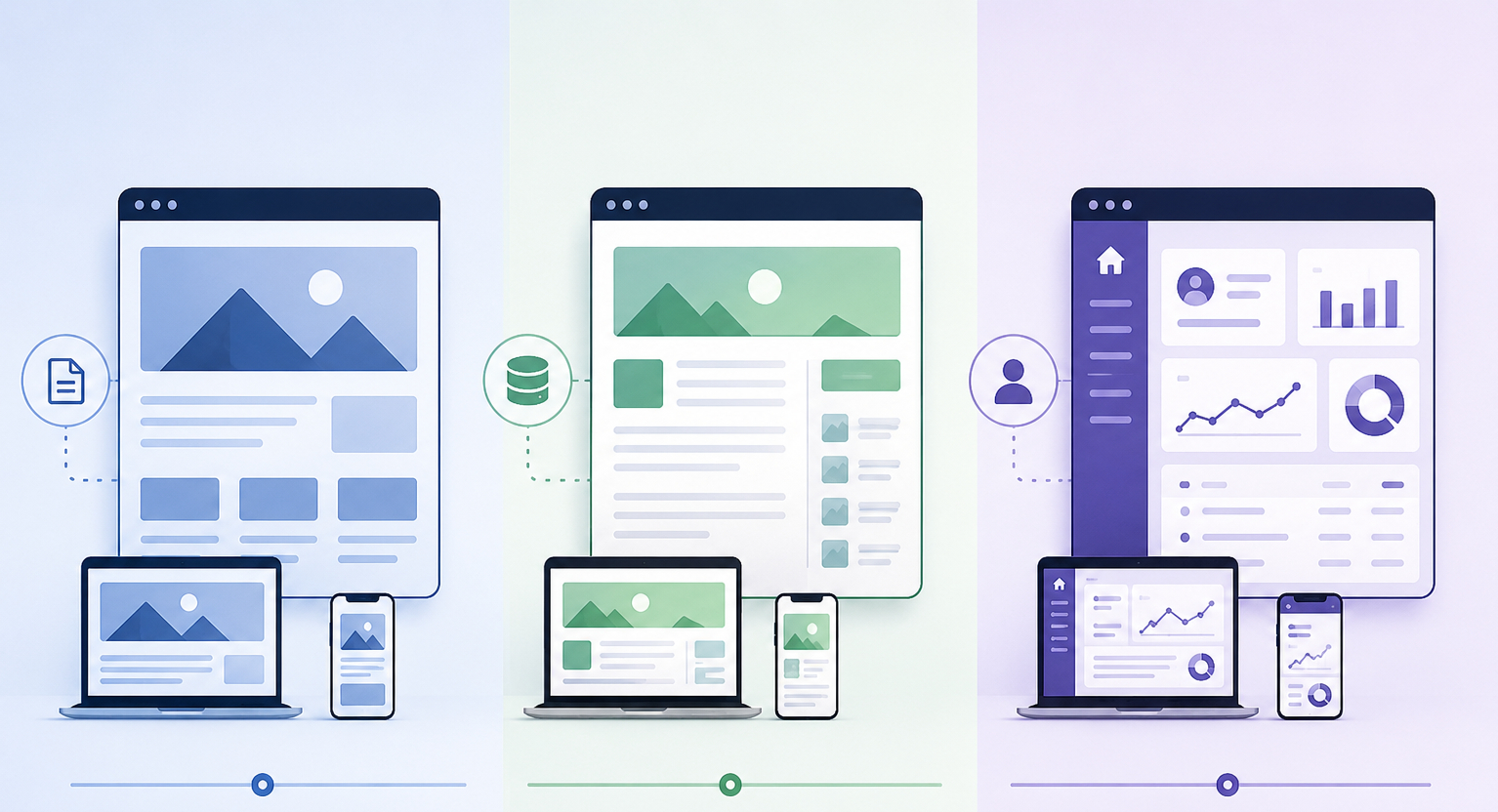
🔹 Static Website — simple and fast solution
Static websites are usually informational websites. For example:
- Company information
- Services
- Portfolio websites
In this type of website, the content is directly written into the code. Updates usually require developer involvement.
🔹 Dynamic Website — manageable and flexible
A dynamic website provides a more advanced structure. It usually includes an admin panel where content can be managed easily.
- Publishing blog posts
- Adding products
- Managing user information
🔹 Web Application — more than just a website
Some projects require much more than displaying information. This is where web applications come in, like CRM systems or booking platforms.
💡 Final thoughts: The goal is not to choose the most expensive option — it is to choose the right solution for your business.